Designing Productive Workspaces
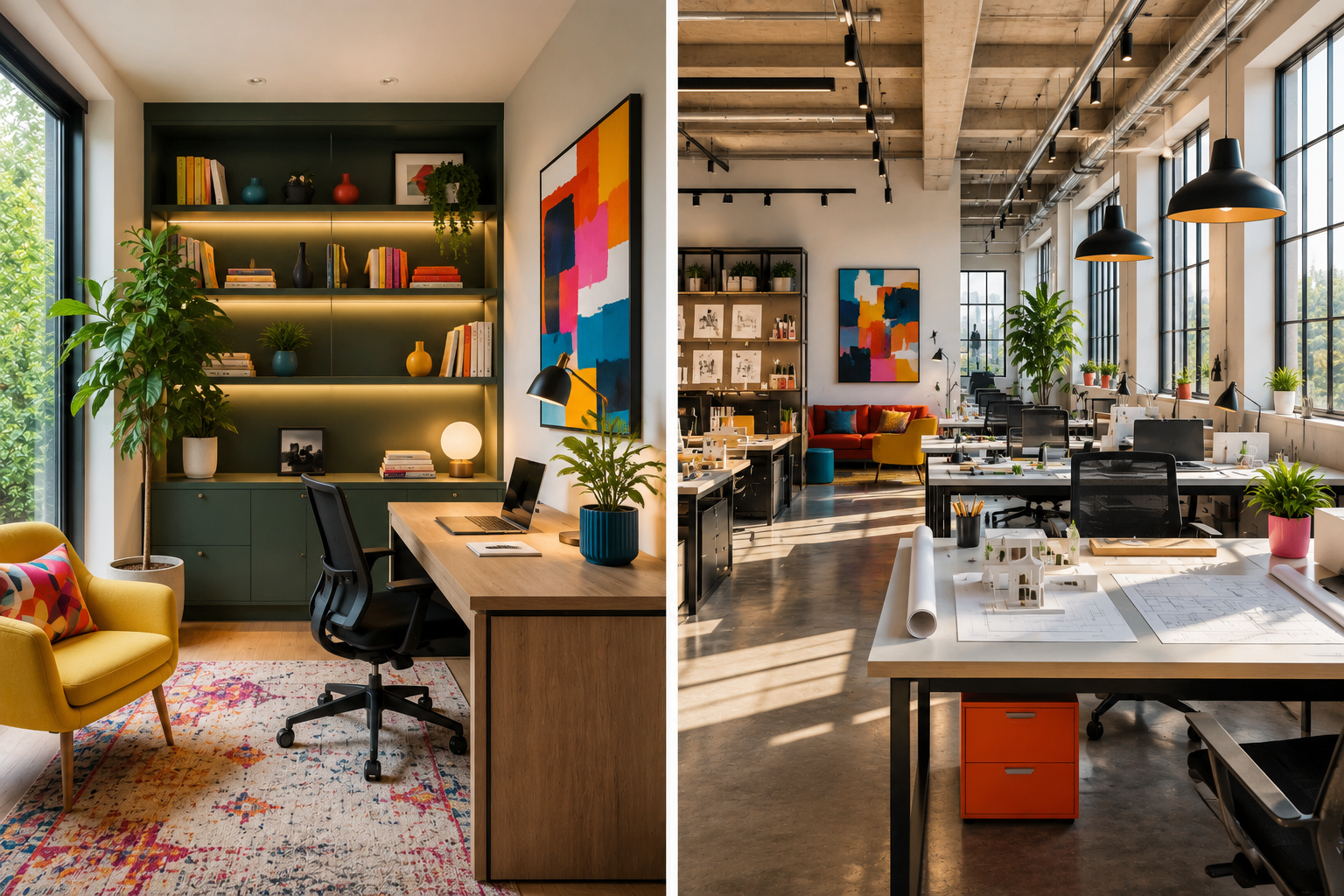
The way we work has changed dramatically in recent years. Hybrid working, flexible office environments, and the growing demand for work-life balance have transformed what people expect from their workspaces. Whether it's a dedicated home office, a collaborative commercial environment, or a multifunctional space that adapts throughout the day, good interior architecture has never been more important.
A well-designed workspace does far more than accommodate a desk and chair. It can enhance productivity, support physical and mental wellbeing, reduce distractions, and create environments where people genuinely enjoy spending their time.
Designing productive workspaces is about much more than choosing furniture or arranging desks. It's about creating environments that support concentration, collaboration, wellbeing, and flexibility. Whether designing a bespoke home office, refurbishing a commercial workplace, or planning a hybrid environment, thoughtful interior architecture can significantly improve the way people work.
By considering acoustics, wellness, spatial planning, natural light, ergonomics, and flexible design solutions from the outset, businesses and homeowners alike can create workspaces that not only look exceptional but genuinely enhance performance and everyday wellbeing.
The Foundations of a Productive Workspace
Every successful workspace starts with understanding how it will be used. Different tasks require different environments, and there is no one-size-fits-all solution. Consider how the space needs to function: Focused, individual work, collaborative meetings, video conferencing, creative thinking, quiet reading or research, informal conversations, breaks and moments to recharge, client or staff only-facing areas.
Designing with these activities in mind creates spaces that support people throughout their working day rather than forcing them to adapt to the environment.
Home Workspaces: Creating Balance
Working from home is now a permanent reality for many professionals. However, productivity often depends on separating work from everyday living.
Where possible, a dedicated home office provides the greatest benefits, but even smaller homes can incorporate effective workspaces through thoughtful design. Popular home workspace solutions include:
A dedicated study or spare room conversion
Built-in cabinetry with an integrated workstation
Under-stair office nooks
Garden offices for complete separation
Multi-functional guest rooms with concealed workstations
Window-facing desks that maximise natural daylight
Kitchen or dining spaces designed with discreet work zones
The goal is to create an environment that encourages focus during working hours while allowing the space to transition back into home life at the end of the day.
Commercial Workspaces: Supporting Different Ways of Working
Modern workplaces have evolved beyond rows of identical desks. Today's offices are designed around activity-based working, providing employees with a variety of spaces suited to different tasks. Offering choice allows employees to select the environment that best suits the task at hand, improving both efficiency and satisfaction. Successful commercial workspaces often include:
Open-plan collaboration zones
Quiet focus rooms
Meeting rooms of varying sizes
Phone booths for private calls
Informal lounge areas
Hot-desking environments
Project spaces for team collaboration
Breakout cafés and social hubs
Wellness or quiet rooms
Prioritising Workplace Wellness
Interior architecture plays a significant role in supporting employee health and wellbeing. Research consistently shows that thoughtfully designed environments can reduce stress, improve concentration, and increase overall job satisfaction.
Natural Light
Maximising daylight is one of the most effective ways to improve wellbeing. Exposure to natural light supports healthy circadian rhythms, improves mood, and helps maintain energy throughout the day. Where natural light is limited, layered lighting schemes with adjustable task lighting can provide flexibility while reducing eye strain.
Biophilic Design
Introducing nature into workspaces has become a key design principle. Biophilic design may include indoor planting, living walls, natural finishes and textures, organic forms or views of gardens or outdoor spaces. These elements create calmer environments and help reduce mental fatigue.
Ergonomics
Comfort directly influences productivity. Height-adjustable desks, supportive seating, monitor positioning, and appropriate lighting all contribute to healthier working habits and reduce the risk of physical issues or injury.
The Importance of Acoustic Design
Noise is one of the biggest barriers to concentration, particularly in open-plan environments and busy homes. Acoustic design is often overlooked but has a significant impact on productivity. Effective acoustic strategies include acoustic wall panels, sound-absorbing ceiling systems, acoustic flooring, upholstered furniture, curtains and soft furnishings, acoustic partitions, phone booths and enclosed meeting pods or white noise systems where appropriate.
In residential settings, careful room placement and sound insulation between workspaces and living areas can minimise household distractions.
The objective is not complete silence, but creating environments where people can comfortably focus, communicate, and collaborate.
Making the Most of Space
Productive workspaces don't always require large footprints. Intelligent spatial planning can transform even compact areas into highly functional environments. Some effective approaches include built-In joinery, flexible furniture, zoning and visual connection
Storage That Supports Productivity
Clutter can quickly become a source of distraction. Integrated storage solutions help maintain organised workspaces while contributing to a calm, professional aesthetic. Effective storage may include built-in shelving, concealed cupboards, mobile pedestal units, wall-mounted systems, cable management or multi-functional furniture with hidden storage.
Designing storage from the outset ensures it becomes part of the architecture rather than an afterthought.
Designing for Hybrid Working
Many organisations now support flexible working patterns, meaning spaces need to accommodate both in-person collaboration and remote communication. This often requires dedicated video conferencing spaces, reliable technology integration, excellent lighting for virtual meetings acoustic privacy flexible meeting environments or shared touchdown workstations. Future-proofing workspaces allows them to adapt as working patterns continue to evolve.
Every Workspace Should Reflect Its Users
Perhaps the most important consideration is that every workspace is unique. A creative agency requires a very different environment from a legal practice. Likewise, a freelancer working from home has different needs to a family sharing a multifunctional living space.
Good interior architecture responds to these individual requirements, balancing functionality with aesthetics to create environments that are practical, inspiring, and enjoyable to use every day.